Update Traceability Technical Artefacts (EPCIS based)
other
Project Details
|
Relevant SDG targets
SDG 8 (Decent work), SDG 9 (innovation). SDG 12 (responsible consumption), SDG 15 (life on land) due to exchange of certification details among supply chain partners.
Project Purpose
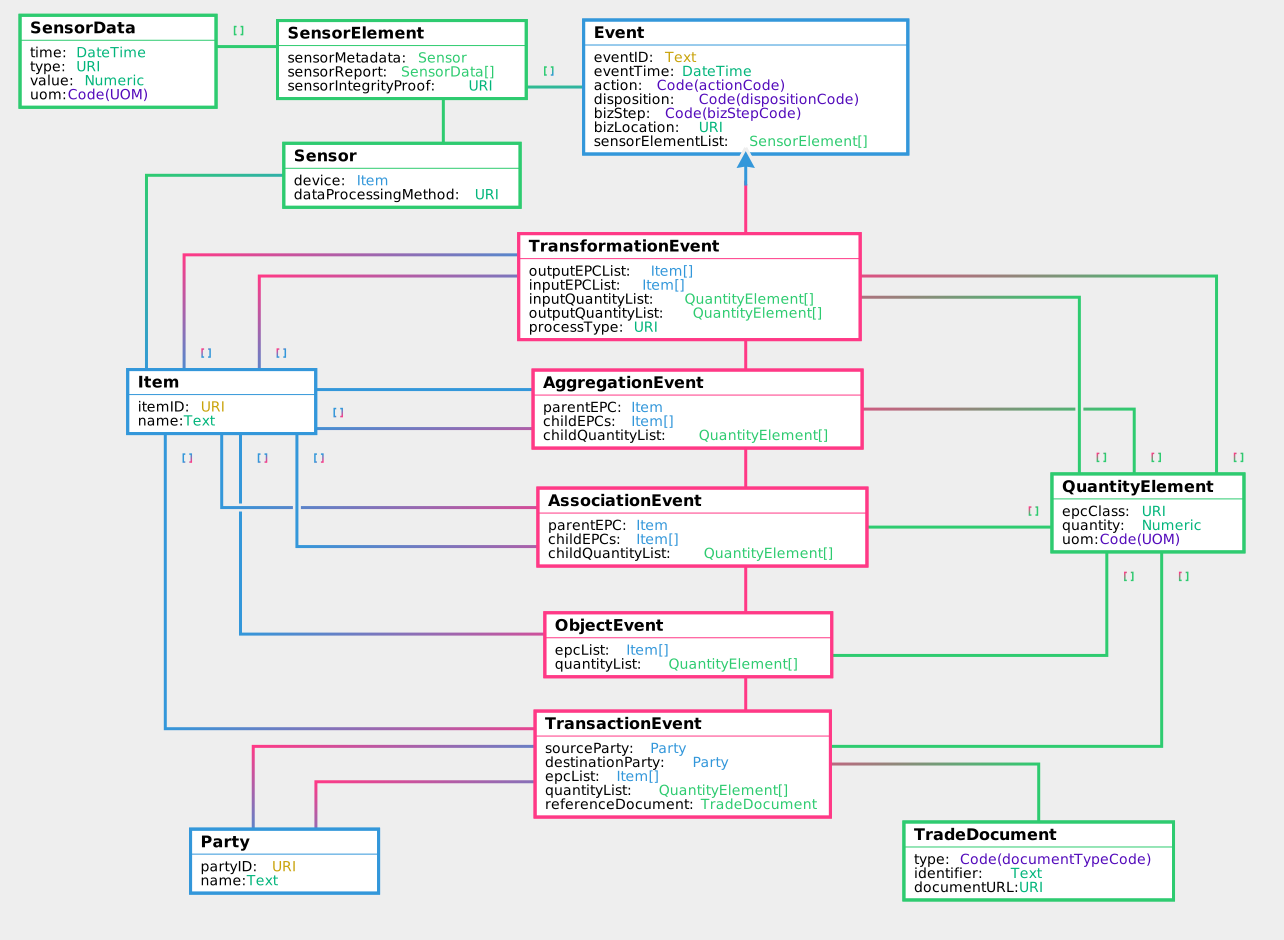
In the interest of anticipating and following technological trends, UN/CEFACT is extending from a document-centric to a process-driven approach for electronic business message development. The technical artefacts for supporting traceability, based on the EPCIS standard as defined in ISO/IEC 19987, needs an update. This update includes improvements that help increase interoperability, scalability, and data quality. The EPCIS 2.0 standard supports the integration with IoT-based systems (sensor data). it would be easier to detect counterfeit in the supply chain and supports a new type of event, the association event, e.g. linking a sensor to the container or returnable asset to which it is attached. The UNTP concept on Github is using a subset of EPCIS 2.0. Because the UN/CEFACT Buy Ship Pay Reference Data Model (BSP RDM) adopted EPCIS based traceability data and makes the data components available in the JSON syntax on Github, there is a need to update the UN/CCL.
This project proposal will target the differences between the business information entities used in the UNTP Traceability data model and the one residing in the UN/CCL and syntax-neutral UN/CEFACT BSP RDM. The result of the project will be the inclusion of needed or missing CCs (Core Components) and BIEs (business information entities) to be added in the UN/CCL and derived data structures and their syntaxes.
Project Scope
This project will provide the technical artifacts to update the UN/CCL traceability data components to align with the latest update of the ISO/IEC 19987 and data model subset used within UNTP traceability data model. This will facilitate software developers to “build in” the technical artifacts into existing or newly developed concepts which is highly relevant for interoperability.
- Development of the technical artifacts, CC’s (Core Components) and BIEs (Business Information Entities), to be included in the UNCCL and relevant RDMs, such as BSP RDM.
- The scope of this technical project is international, cross-border, domestic and cross-industry.
- The technical artifacts will be modelled according to the UN/CEFACT Modelling Methodology (UMM) in order to build CCBDA compliant semantic business models.
- The technical artifacts will be generated from the reference data model(s) either in XML or JSON syntax.
Project Deliverables
Exit Criteria
Final deliverable ready for publication.
Impact analysis
The adoption of new data components in the UNCCL is entirely optional for users. This update is relevant for users who need certification information related to harvest, production, shipments, and locations; reduction of carbon emissions; efficient use of water and land; or those seeking to utilize business-relevant sensor data (e.g., temperature-controlled transport, measured concentrations of chemicals).
Project Team Membership and Required Functional Expertise
Membership is open to UN/CEFACT experts with broad knowledge in the area of: Supply chain and related activities as well as in modelling techniques. Knowledge of UN/CEFACT CCTS and UMM is highly recommended.
Experts are expected to contribute to the work based solely on their expertise and to comply with the UN/CEFACT Code of Conduct and Ethics and the policy on Intellectual Property Rights.
In addition, Heads of Delegations may invite technical experts from their constituency to participate in the work.
Experts are expected to contribute to the work based solely on their expertise and to comply with the UN/CEFACT Code of Conduct and Ethics and the policy on Intellectual Property Rights.
Geographical Focus
The geographical focus of the project is global.
Beneficiaries
The EPCIS update will enhance data collection through the introduction of an additional event type. This update provides precise visibility into which items were incorporated into specific products, assemblies, or assets (e.g., removing a defective component from an assembly, which could be relevant for identifying repaired products). Numerous data components support the implementation of web technologies, such as APIs, making them more accessible to mobile phone users.
Initial Contributions
The following contributions are submitted as part of this proposal. It is understood that these contributions are only for consideration by the Project Team and that other participants may submit additional contributions in order to ensure that as much information as possible is obtained from those with expertise and a material interest in the project. It is also understood that the Project Team may choose to adopt one or more of these contributions “as is”.
- ISO/IEC 19987 Traceability standard, developed by GS1.
- UN/CEFACT UNTP Traceability data model (draft), based on GS1 vocab
- UN/CEFACT Core Components Library
- UN/CEFACT Buy-Ship-Pay Model
- UN/CEFACT Modelling Methodology (UMM)
- UN/CEFACT JSON Schema Naming and Design Rules
- UN/CEFACT XML Naming and Design Rules
Resource Requirements
Participants in the project shall provide resources for their own participation. The existence and functioning of the project shall not require any additional resources from the UNECE secretariat.
Project Proposal Files